of Barral Institute
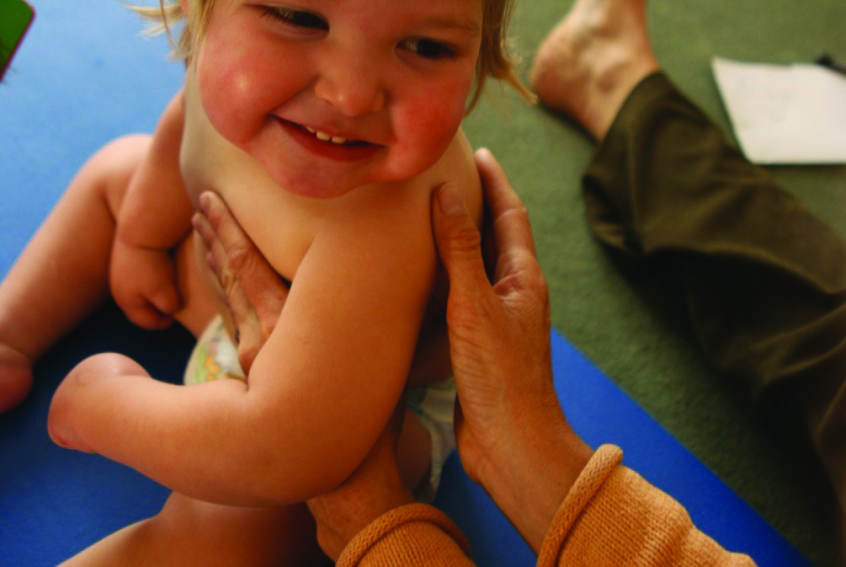
Visceral Manipulation: Applications for Pediatrics
Visceral Manipulation Applications for Pediatrics
- Gentle approach typical of the Jean-Pierre Barral method
- Practical and effective techniques for working with infants, toddlers and children
- Prerequisitement: VM2, NM1
COURSE HIGHLIGHTS
Learn how early therapy on newborns and infants can possibly reduce the percentage of problems later in life, therefore, the use of visceral manipulation in pediatrics is particularly important.
During the training, participants will learn about the following areas:
- Explore embryology and the developmental landmarks (normal and abnormal) that occur month by month during and after gestation
- Discover how to evaluate a baby or child
- Learn general treatment ideas, such as how to work with babies, toddlers, and children, as well as working with those who are tactilely sensitive
- Understand the signs of trauma, as well as evaluation and treatment techniques
- Integrate specific treatment techniques for common visceral restrictions found in children, as well as Barral's approach to cranial techniques
- Learn about Visceral Manipulation precautions and contraindications when working with children
- Explore special considerations, e.g. typical surgeries, prematurity, children with neuromotor problems and craniosynostosis
- Practice working with infants and children in a supervised environment
Instructor
RENE ASSINK
physiotherapist, osteopath, BI-D, CST-D (Germany)
Official instructor of 17 different courses at the Barral Institute
He also teaches ADV level and pediatric training at the Upledger Institute
He led the German Barral and Upledger Institute for over 10 years

Rene Assink

Barbara Feller
Assistant
Barbara Feller
physiotherapist, osteopath, alternative therapist(Germany)
Instuctor of the Barral Institute (NM1 and VAP)
CSP1 and CSP2 level Instuctor of Upledger Institute
THE DATE OF TRAINING
27-30. August,2026.
LOCATION
Budapest, exact location to be determined later
COURSE DURATION
| Day 1 | Registration Course | 08:30-08:55 09:00-18:00 |
| Day 2 | Course | 09:00-17:30 |
| Day 3 | Course | 09:00-17:30 |
| Day 4 | Course | 09:00-16:00 |
Workshop schedule is subject to change. Workshop may run late each day in order to be able to cover all material planned for that day.
COURSE FEE
With Early bird discount:
(If the fulfilled Application form and the full course fee is received by 31 January 2026)
700 EUR
From 1st February 2026
850 EUR
Including Study Guide, excluding food, lodging and transportation
For repetitors
450.00 EUR
COURSE TOPIC
- Differences between the treatment of children and adults in terms of the nervous system and internal organs
- General embryology
- Guided exercises
- Cranial embryology
- Listening on the skull, cranial sutures/foramina/tentorium, viscerocranium
- Craniocervical transition, combined techniques
- Regulation and co-regulation
- Normal development
- Examination, Guidelines for treatment techniques, relative contraindications
- Demonstration treatments
- The viscera - embryology, examination and treatment
Stomach, liver, sphincters, small intestine, kidneys and urogenital system, heart and lungs - Vagus nerve
- Supervised exercises in young children, infants
- Contraindications, special considerations
- Questions and answers
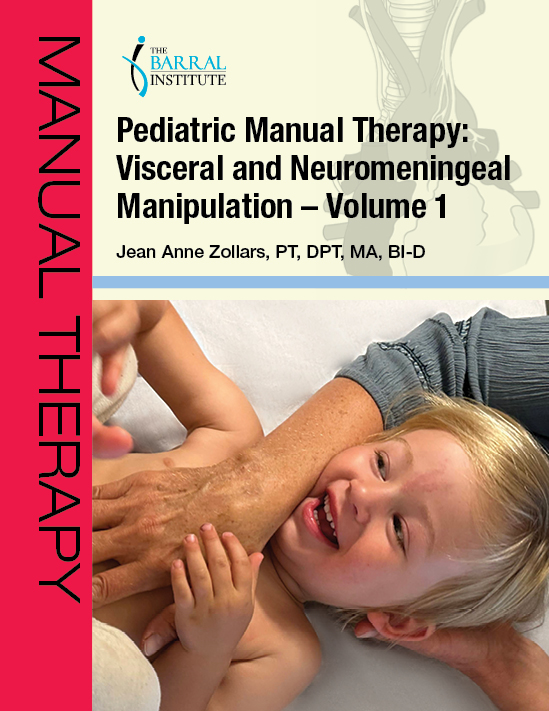
RECOMMENDED READING
Pediatric Manual Therapy: Visceral and Neuromeningeal Manipulation - Volume 1 by Jean Anne Zollars
Pediatric Manual Therapy: Visceral and Neuromeningeal Manipulation -
Volume 2 by Jean Anne Zollars